


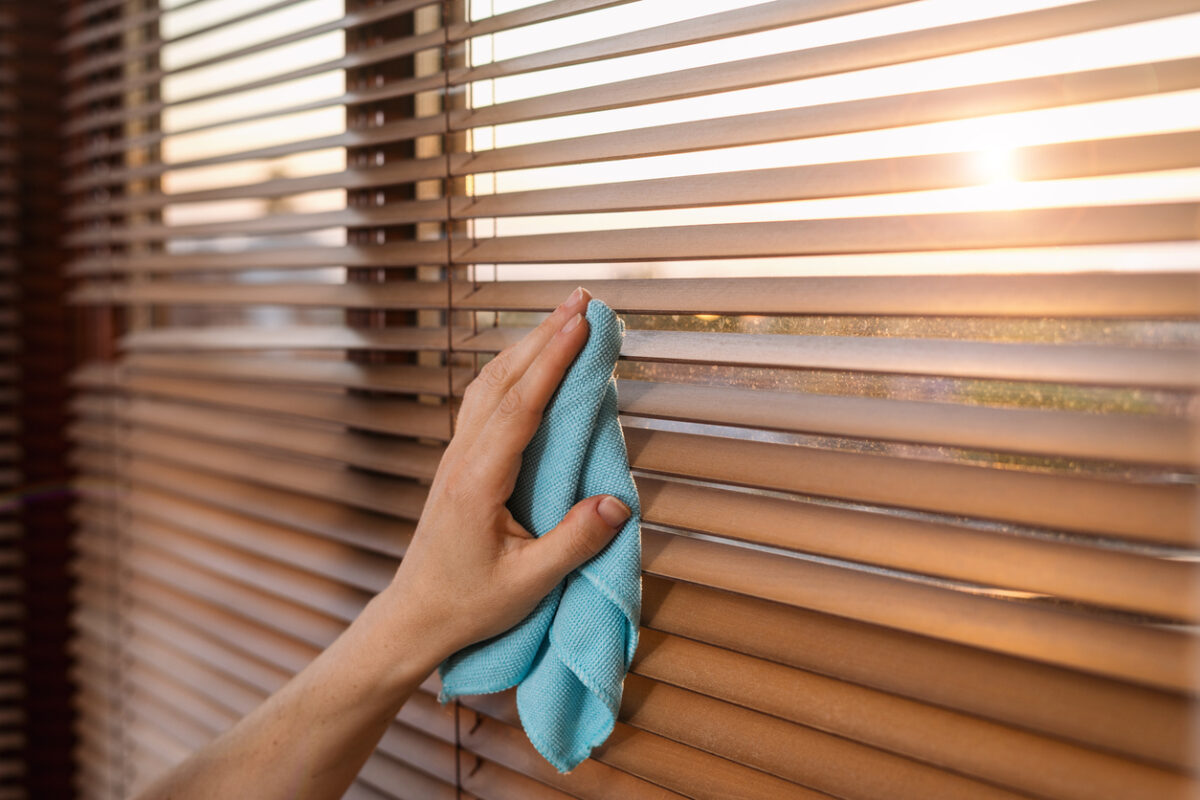
Roller blinds are popular because they are attractive and effective at maintaining privacy and keeping temperatures constant. But they can attract dust, dirt and insects, and can also be affected by mould in damp conditions. Dirty blinds can contribute to poor air quality in a house and so it is important you keep them clean.
How to Clean Roller Blinds
Maintaining clean roller blinds is not a particularly difficult or time-consuming task, providing you do it regularly so dirt does not become too ingrained. It’s best to give them a quick clean every two weeks or so because they can easily become dirty. But, before using any sort of product on them, test it on a small section that isn’t easily noticed to check that it won’t damage the material.
It is possible to clean roller blinds in place by rolling them down to their full extent or they can be removed from their brackets and placed on a flat surface. First use a vacuum cleaner with a brush attachment to remove dust, working downwards with a sideways motion.
Immerse a cloth in warm water with some mild detergent and wring out the cloth. Then work down and across for the whole blind, wiping gently rather than scrubbing too hard since this can damage the fabric. Once complete, leave the blind down or laid out until it is completely dry.
If your blinds become really dirty, a deep clean should be undertaken. This is best done every 3-6 months or as conditions dictate. If there are particularly stubborn and unsightly stains on your blinds, treat them first before carrying out a general clean. Always take the blind down to deep clean so you do this more thoroughly.
Spot cleaning should be done with a sponge, blotting the area rather than scrubbing to avoid damaging the material and spreading the stain. Use mild soap and water for grease, rubbing alcohol for ink, an eraser for scuff marks, a lint roller for pet hairs or a vinegar solution for water stains. If the stains are really stubborn, use a toothbrush or nail brush with care. A special purpose stain remover can also be applied but must be removed as far as possible with a damp cloth once the stain has been treated.
To deep clean, place plastic and vinyl blinds in a bathtub of soapy water and leave for 1-3 hours, or overnight if really dirty; for white blinds, add some bleach to the water. Materials that are more delicate can be treated with a dry cleaning sponge.
Once the cleaning time has elapsed, examine the blind for any remaining marks and rub them gently with a damp cloth. You may need to add some sort of stain remover to be more effective. Rinse the clean blind thoroughly with clean water to remove any detergent and then leave outside or on a drying rack until it is completely dry. This is important because rolling up a damp blind can result in the formation of mould. On completion, put the blind back in place.
How to Clean Mould off Roller Blinds
Mould will form in damp and humid conditions and is not only unsightly but can be harmful for your health. So, it is important it is removed quickly. Wear a mask while doing this so you don’t inhale the spores.
You can clean the unrolled blind in place but may find it easier to take it down and treat on a flat surface. First use a vacuum cleaner with a brush attachment to remove any loose mould. You can then either spray with white vinegar and rinse off after one hour using a cloth and warm water, or wipe off the mould using a solution of lemon juice, salt and water. On completion, always leave the blind unrolled until completely dry.
For blinds made of substantial material, steam cleaning is possible. Cheap fabrics and vinyl are prone to warping so test a small area first before starting. Roll out the blind and follow the manufacturer’s instructions, taking care not to leave the cleaner in one place for too long.
Using a brush attachment, move the cleaner across and down the blind, repeating the process on the reverse side. Re-hang the blind and wipe down with a cloth, then leave unrolled until fully dry.
How to Get Creases Out of Roller Blinds
Creases in a blind will spoil its appearance and the normal recommendation is to lay the blind flat and press out the creases using a soft cloth or an iron on low heat. However, this rarely works very well and the outcome is usually unsatisfactory.
The best course of action is to avoid getting creases in your blind by treating it carefully, avoiding over-rolling and preventing moisture and sun damage. If, however, your blind becomes creased or has damage and stains you can’t remove, the best option is to replace it.
We have a wide range of roller blinds as well as other types, in a variety of styles, colours and materials. So check out our range and give a fresh look to any room.